Key Takeaways
- Elbow replacement is typically considered for patients with severe elbow arthritis, complex fractures, or joint damage that hasn't responded to other treatments.
- The procedure replaces damaged portions of the joint with metal and plastic implants, and often takes one to two hours.
- Modern implant design and surgical technique have significantly improved outcomes compared to earlier generations of elbow replacement.
- Most patients experience significant pain relief and improved range of motion, though long-term activity is generally limited to avoid excess strain on the joint.
- Dr. Srinath Kamineni brings Mayo Clinic fellowship-trained expertise in elbow replacement to patients in Mount Carmel and Olney, IL. Request an appointment to find out if it's the right option for you.
Who Is a Candidate for Elbow Replacement?
Elbow replacement is generally considered when pain and loss of motion from elbow damage significantly limit daily activities and non-surgical treatments are no longer effective. Common conditions that may lead to elbow replacement include:
- Severe rheumatoid arthritis or osteoarthritis
- Complex fractures of the elbow, particularly in older patients with lower bone quality
- Bone tumors affecting the joint
- Significant joint damage from a previous injury
What the Procedure Involves
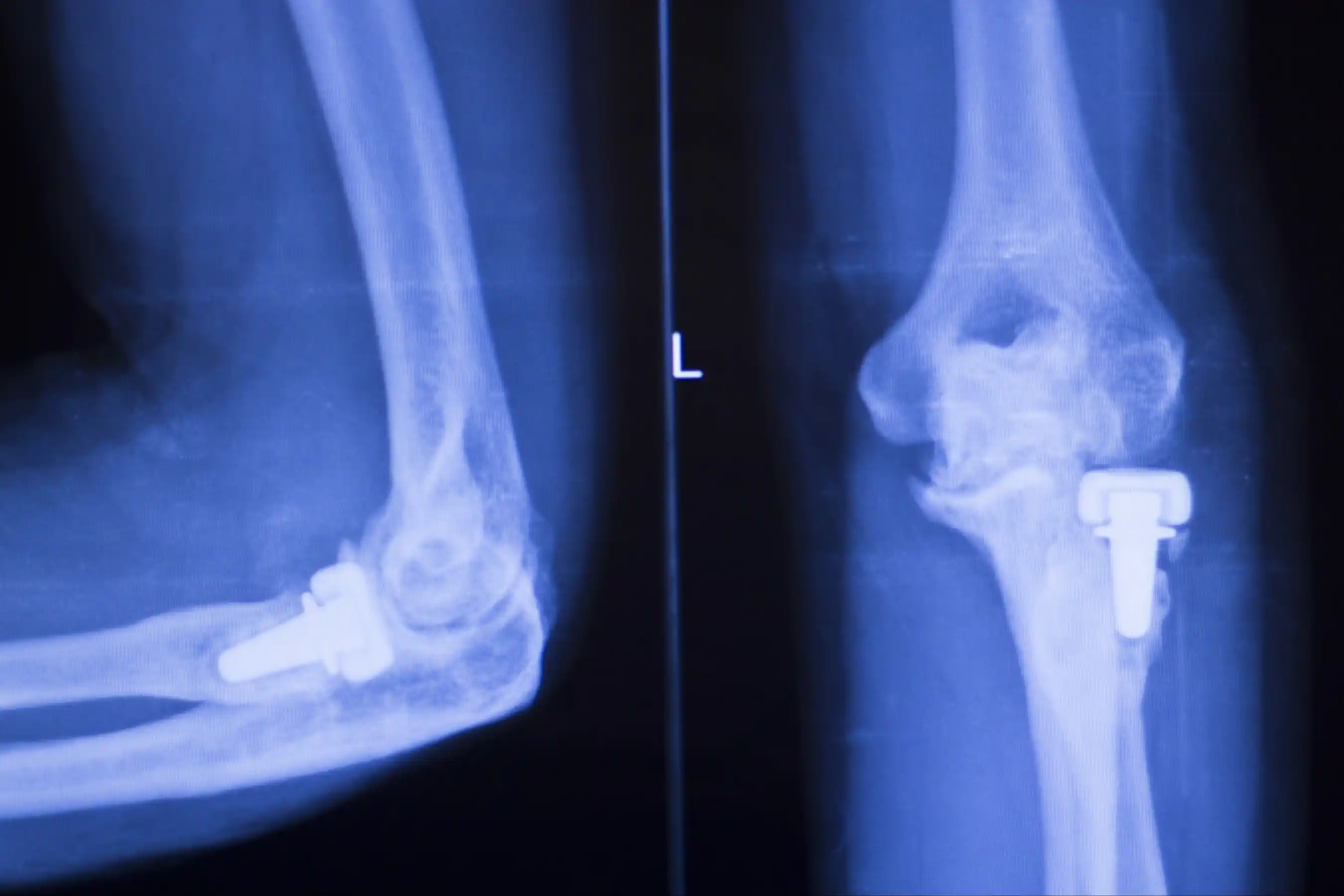
The elbow is where three bones meet — the humerus, radius, and ulna — making it a uniquely complex joint to replace. During surgery, damaged portions of the joint are removed and replaced with implants made of metal and plastic. In some cases, only part of the joint — such as the head of the radius — needs to be replaced, while more extensive damage may require replacing the entire joint.
The surgery typically takes one to two hours, and many patients are able to go home the same day, though this depends on individual health and recovery needs. Depending on the extent of surgery, a splint or sling may be needed for a period of days to weeks afterward.
Recovery Timeline and Physical Therapy
After surgery, your care team will guide you through a structured recovery plan, which typically includes:
- A period of splinting or sling use to protect the joint
- Early, guided range-of-motion exercises to prevent stiffness
- Progressive physical therapy focused on regaining strength and function
- Long-term activity guidance, since implants are mechanical devices that can wear over time
Most patients experience significantly less pain after surgery, along with improved range of motion and strength for everyday tasks.
Advances Improving Elbow Replacement Outcomes
Elbow replacement has historically carried a higher complication rate than hip or knee replacement, largely due to the joint's complexity and its close relationship with the ulnar nerve and triceps tendon. However, modern implant design and surgical technique have meaningfully reduced complication rates in recent years, and today's elbow replacements offer a reliable solution for many patients whose elbow arthritis or joint damage significantly limits their quality of life.
Living With an Elbow Replacement
Because elbow implants are mechanical devices, most surgeons recommend avoiding high-demand activities on the replaced joint — such as heavy weight training or repetitive manual labor — to help the implant last as long as possible. With that guidance in mind, most patients are able to comfortably return to the everyday activities that mattered most to them before surgery.
Elbow Replacement at a Glance
| Consideration | Details |
|---|---|
| Common candidates | Severe arthritis, complex fractures, bone tumors, prior joint damage |
| Procedure length | Typically 1–2 hours |
| Hospital stay | Many patients go home the same day |
| Recovery focus | Splinting, guided motion, progressive strengthening |
| Long-term care | Activity modification to protect implant longevity |
Schedule a Consultation
If elbow pain and stiffness are limiting your daily life, an accurate diagnosis is the first step toward finding the right treatment.
Request an appointment with Dr. Kamineni to discuss whether elbow replacement is right for you, for patients in Mount Carmel and Olney, IL.
Frequently Asked Questions
How long does recovery take after elbow replacement surgery?
Recovery varies by patient, but most people work through a structured physical therapy program over several weeks to months to regain strength and motion.
Is elbow replacement as reliable as hip or knee replacement?
Elbow replacement has historically had a higher complication rate than hip or knee replacement due to the joint's complexity, though modern techniques and implant design have significantly improved outcomes.
What activities should I avoid after elbow replacement?
Most surgeons recommend avoiding high-demand activities like heavy weight training or repetitive manual labor to protect the longevity of the implant.
Can only part of the elbow joint be replaced?
Yes. In some cases, such as damage limited to the radial head, only that portion of the joint needs to be replaced rather than the entire elbow.
