
Key Takeaways
- Reverse shoulder replacement swaps the normal ball-and-socket arrangement, allowing the deltoid muscle to power the arm when the rotator cuff is severely damaged.
- 3D surgical planning and modern implant designs have significantly improved the precision and outcomes of this procedure.
- Reverse shoulder replacement is especially beneficial for patients with massive rotator cuff tears, severe arthritis, or a previously unsuccessful shoulder replacement.
- Long-term studies show strong survivorship and lasting improvements in pain and function for appropriate candidates.
- Dr. Srinath Kamineni offers advanced reverse shoulder replacement, supported by Enovis® implant technology and cutting-edge augmented reality, for patients in Mount Carmel and Olney, IL. Request an appointment to see if this procedure is right for you.
What Is Reverse Shoulder Replacement?
In a traditional shoulder replacement, the surgeon follows the shoulder's natural anatomy — the ball at the top of the humerus fits into the socket of the shoulder blade. In a reverse shoulder replacement, that arrangement is flipped: a metal ball is fixed to the shoulder blade, and a socket is attached to the top of the humerus.
This design allows the deltoid muscle, rather than the rotator cuff, to power arm movement — making it an effective option for patients whose rotator cuff can no longer support normal shoulder mechanics.
Who Benefits Most From Reverse Shoulder Replacement?
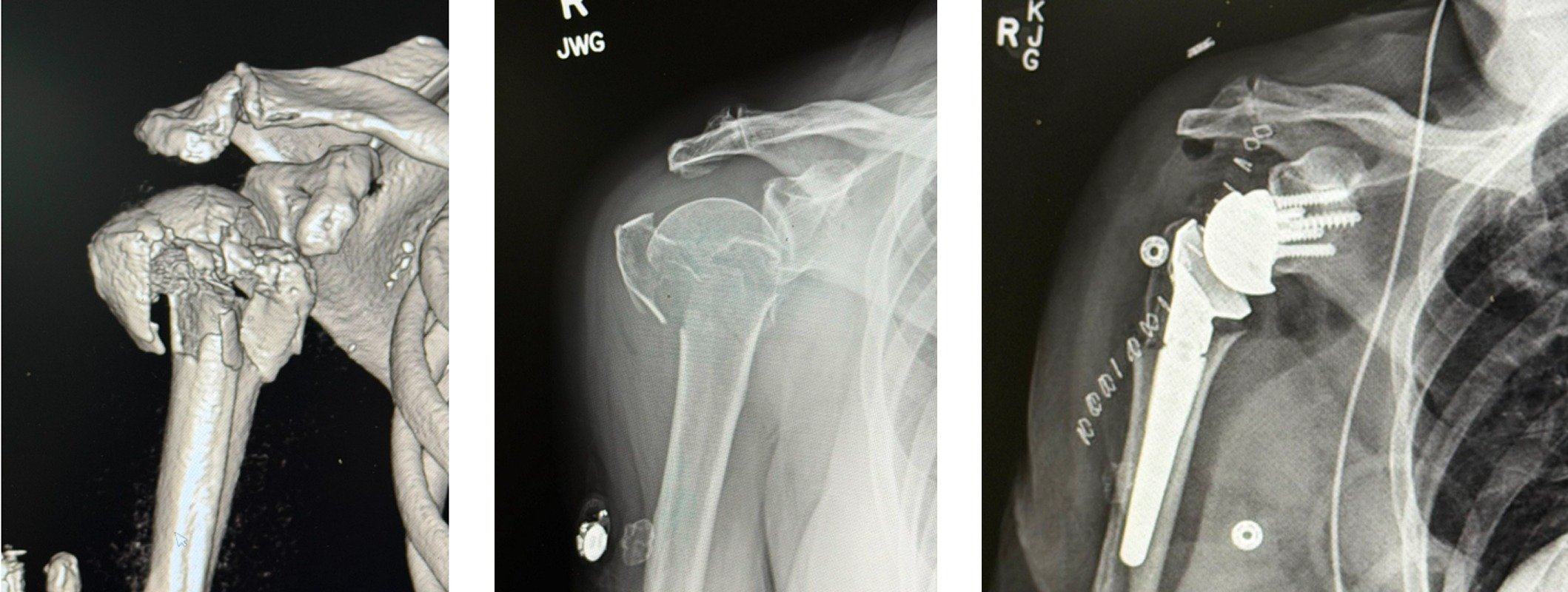
Reverse shoulder replacement is commonly recommended for patients with:
- Massive or irreparable rotator cuff tears
- Severe arthritis combined with rotator cuff damage (rotator cuff tear arthropathy)
- Complex fractures of the upper humerus
- A previous shoulder replacement or surgery that failed to relieve symptoms
Recent Advances Improving Outcomes
3D Surgical Planning
Three-dimensional CT-based planning has become one of the most widely used technologies in shoulder replacement, allowing surgeons to visualize a patient's specific anatomy, including glenoid (socket) shape and bone quality, before ever making an incision. This level of pre-surgical detail supports more precise implant placement and alignment.
Improved Implant Design
Modern reverse shoulder implants benefit from refined materials and geometry that improve joint stability and reduce the risk of certain complications, such as scapular notching. Bone-preserving and stemless options have also expanded, giving surgeons more flexibility to tailor the implant to each patient's anatomy.
Strong Long-Term Outcomes
Long-term studies of reverse shoulder replacement have shown significant, lasting improvement in overhead function and patient-reported outcome scores for up to 20 years after surgery, with ten-year implant survivorship reported as high as 94% in appropriate candidates.
Same-Day Surgery Options
Advances in surgical and anesthetic technique have made outpatient reverse shoulder replacement increasingly common, allowing many patients to return home the same day rather than requiring an extended hospital stay.
Traditional vs. Reverse Shoulder Replacement
| Factor | Traditional (Anatomic) Replacement | Reverse Shoulder Replacement |
|---|---|---|
| Best suited for | Arthritis with a healthy rotator cuff | Massive rotator cuff tears, cuff tear arthropathy, failed prior surgery |
| Joint mechanics | Follows natural anatomy | Ball and socket positions reversed |
| Powered by | Rotator cuff | Deltoid muscle |
| Recovery | Typically involves protecting the repaired subscapularis tendon | Often allows earlier active movement |
Enovis® Technology in Reverse Shoulder Replacement
Dr. Kamineni utilizes advanced Enovis® implant systems for reverse shoulder replacement, supporting a personalized approach to implant selection and placement for each patient's unique anatomy and condition.
Schedule a Consultation
If you've been told that a torn rotator cuff or severe shoulder arthritis may require surgery, reverse shoulder replacement may offer a path back to comfortable, functional movement.
Request an appointment with Dr. Kamineni to learn more about reverse shoulder replacement for patients in Mount Carmel and Olney, IL.
Frequently Asked Questions
How is reverse shoulder replacement different from a traditional shoulder replacement?
A reverse shoulder replacement swaps the position of the ball and socket, allowing the deltoid muscle to move the arm instead of the rotator cuff, making it well suited for patients with severe rotator cuff damage.
Who is a good candidate for reverse shoulder replacement?
Patients with massive rotator cuff tears, cuff tear arthropathy, certain complex fractures, or a previously unsuccessful shoulder replacement are often good candidates.
How long do the results of reverse shoulder replacement last?
Long-term studies show strong implant survivorship, with meaningful improvements in pain and function reported up to 20 years after surgery in appropriate candidates.
Is reverse shoulder replacement a same-day surgery?
Advances in surgical technique have made outpatient reverse shoulder replacement increasingly common, though your surgeon will determine what's appropriate based on your specific case.
